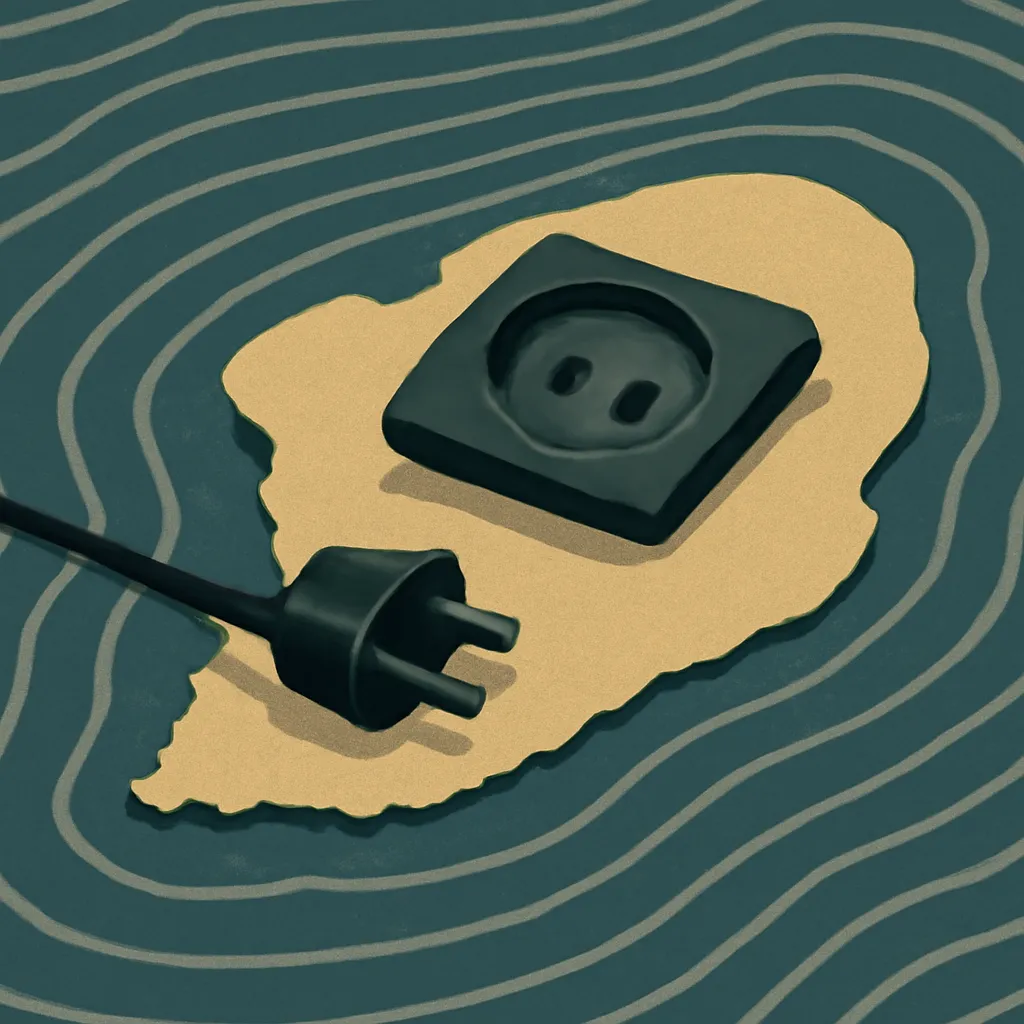
South African talk radio spent mid-August tracking a Constitutional Court judgment that decisively halted Shell and Impact Africa's oil and gas exploration off the Eastern Cape's Wild Coast. In a 7-2 majority ruling authored by Justice Jody Kollapen, the Apex Court overturned a 2024 Supreme Court of Appeal decision that had kept the companies' exploration rights alive pending a third renewal application, finding that the original 2014 grant was tainted by an absence of meaningful public participation.
Stations framed the outcome as a landmark win for coastal communities and environmental groups who had fought the seismic surveys since 2021. Presenters on SAfm, Cape Talk and 702 repeatedly emphasised that the court had placed 'people over profits', anchoring its reasoning in the cultural, spiritual and livelihood connection Wild Coast communities have with the ocean. With a national moratorium already in place on new offshore oil and gas applications in the area, on-air legal voices said Shell and Impact Africa would now have to 'start afresh' — if they pursue the area at all.
Talk radio's coverage of the Wild Coast judgment was unusually uniform in tone: this was framed, from the first bulletins on 14 August, as a definitive legal endpoint rather than a procedural pause. SAfm's midday bulletin opened by noting that the Constitutional Court had 'effectively blocked Shell's oil exploration of the Wild Coast', explicitly overturning the 2024 Supreme Court of Appeal judgment that had gone the other way.12 Cape Talk's John Maytham segment set out the legal architecture more precisely: a 7-2 majority, authored by Judge Jody Kollapen, that in the presenter's words 'probably sets aside for good any chance that Shell might have to explore for oil and gas in that' block.3
Across all three stations, presenters walked listeners through the same procedural spine. 702 and Cape Talk newsreaders traced the matter back to 2021, when an urgent application to stop imminent seismic blasting exposed that Impact Africa had quietly obtained the licence in 2014 'without meaningful community consultation' before transferring a 50% stake to Shell.45 The Supreme Court of Appeal had found the grant and renewals unlawful in 2024 but controversially allowed a third renewal application to proceed — the arrangement the Apex Court has now, in the recurring on-air phrase, 'pulled the plug' on.67
The framing on Cape Talk and 702 leaned heavily on the court's rights-based reasoning. EWN bulletins quoted the judgment as stressing 'the necessity of public participation to uphold human dignity and environmental protection', with Natural Justice's Melissa Kronink telling listeners the court 'ultimately put people over profits and confirmed that those who are complicit in an unlawful process cannot gain' from it.86 That soundbite ran on loop through the overnight cycle on both stations, cementing the 'people over profits' frame as the dominant editorial line.910
SAfm gave more airtime to the community and legal-strategy angle. Ricky Stone, attorney for the coastal communities, told SAfm that the ruling means 'Shell and Impact Africa must start afresh', and reminded listeners that a national moratorium on new offshore applications is already in force — so even a fresh attempt is blocked, 'at least in the same area of the ocean'.1112 SAfm also foregrounded the sheer scale of the offshore carve-up, with Stone noting that 'upwards of 90% of our ocean is carved into separate blocks'.13
Where the stations subtly diverged was in how they voiced the communities themselves. SAfm ran a local fisherman, Nsadiso Nungtago, saying plainly that allowing Shell to drill would touch 'the angel in our basis' — a rare on-air moment where the spiritual and subsistence stakes were spoken in the first person rather than paraphrased by an advocate.14 Cape Talk's Ordi Kalenga leaned instead on the court's own language, noting the judgment was 'prefaced… on the deep connection that coastal communities have with the ocean for their livelihoods'.1516
The legal reasoning received its most detailed unpacking on Cape Talk, where the presenter explained that the Constitutional Court had found 'serious failures in the original process' and that the SCA had erred in keeping the 'unlawful exploration rights alive while a third [renewal] was considered'.17 That framing — that you cannot cure an unlawful process by allowing a fresh renewal on top of it — was echoed across bulletins and is the strand most likely to resonate in future extractive-industry litigation.18
What the corpus does not contain is any substantive response from Shell, Impact Africa, or the Department of Mineral Resources. No presenter aired a defence of the exploration project or a counter-view from industry; the closest thing to friction was Cape Talk's observation that the 7-2 split meant two justices disagreed, though their reasoning was not unpacked on air.3 For a story with clear economic and energy-policy implications, the on-air debate was strikingly one-sided.
What's worth watching, according to the voices on air: whether the moratorium on new offshore applications holds, whether Shell attempts to 're-enter' via a different block, and how the court's emphasis on cultural and livelihood ties to the ocean is picked up in the next round of environmental litigation. As Ricky Stone put it on SAfm, the 'final decision' has now been made — but the broader fight over who gets to consent to what happens off South Africa's coast is only sharpening.12
- 702
- Cape Talk
- SAfm
Citations
- 1.
“Of South Africa's wild coast. And this was, of course, after the Supreme Court of Appeal had actually granted those rights. And that decision being overturned, that was a 2024 Supreme Court of Appeal judgment. So the Constitutional Court has therefore effectively blocked Shell's oil exploration of the Wild Coast. And then residents around Johannesburg in Melville.”
- 2.
“Now, the Constitutional Court has ruled that Shell cannot proceed with offshore exploration and seismic testing of the West Wild Coast, and it overturned a previous Supreme Court of Appeal judgment, marking a major victory for local communities and environmental groups. The matter was brought by the Wild Coast communities and environmental organizations against oil companies Shell and Impact Africa.”
- 3.
“In a challenge to a Supreme Court of approval to Shell and Impact Africa to continue possibly prospecting for gas to seismic surveys in a 250k strip off the eastern coast. And the Con Court said no. 7-2 vote, and the majority decision authored by Judge Jody Colopin. And I think that probably sets aside for good any chance that Shell might have to explore for oil and gas in that.”
- 4.
“Offshore oil and gas exploration along Eastern Cape's wild coast by multinational giants Shell and Impact Africa Limited. The matter has been in the courts since 2021 when an application to halt imminent seismic blasting by Shell uncovered that a separate company, Impact Africa, had gained the same license in 2014 without meaningful community consultation. This before transferring a 50% stake to Shell. By 2024, the Supreme Court of Appeal found”
- 5.
“When an application to halt imminent seismic blasting by Shell uncovered that a separate company, Impact Africa, had gained the same license in 2014 without meaningful community consultation, this before transferring a 50% stake to Shell. In 2024, the Supreme Court of Appeal found the granting and renewal of permits was unlawful, but allowed for a third renewal application. The Apex Court today pulled the plug on.”
- 6.
“Online. It's 29 minutes now to 6 o'clock. Ordi Kalenga has the latest eyewitness news. Thanks, John. Good evening. The Constitutional Court has halted Shell's offshore oil and gas exploration along the Eastern Cape's Wild Coast. In 2024, the Supreme Court of Appeal found the granting and renewal of permits was unlawful, but allowed for a third renewal application. The Apex Court today pulled the plag on that arrangement, stressing the necessity of public.”
- 7.
“The arrest. Once we get to Madlango, I've presented the evidence to the Commission. I need to go and sit down and read it into the record, and then hopefully the country will understand what's at play and why these people are doing this. But more importantly than that, why they've been getting away with it for so long. A constitutional court order halting Shell and Impact Africa's oil and gas exploration on the wild coast in the Eastern Cape has been hailed a victory for coastal communities. The Apex Court yesterday pulled the plug on an earlier ruling.”
- 8.
“Supreme Court of Appeal found the granting and renewal of permits was unlawful, but allowed for a third renewal application. The Apex Court today pulled the plug on that agreement, stressing the necessity of public participation to uphold human dignity and environmental protection. Advocacy group Natural Justices Melissa Grunink. In setting aside Shell's exploration right, the court ultimately put people over profits and confirmed that those who are complicit in an unlawful process cannot gain an”
- 9.
“For coastal communities, the Apex Court has pulled the plug on an earlier ruling which allowed the companies to seek renewal licenses despite their prior permits being declared unlawful due to lack of public participation. Applicants, including advocacy group Natural Justice, argued that the consultation process was critical to uphold human dignity. The group's Melissa Groning. The court prefaced its judgment on the deep connection that coastal communities have with the ocean for their livelihoods.”
- 10.
“Court order halting Shell and Impact Africa's oil and gas exploration on the wild coast in the Eastern Cape has been hailed as a victory for coastal communities. The Apex Court has pulled the plug on an earlier ruling which allowed the companies to seek renewal licenses despite their prior permits being declared unlawful due to lack of public participation. Applicants, including advocacy group Natural Justice, argued that the consultation process was critical to uphold human dignity.”
- 11.
“Ruling in the Shell matter and ACDP to launch its election manifesto. Good morning. The legal team for the Eastern Cape Wild Coast communities says Shell and Impact Africa have to go back to the drawing board if they want to pursue exploration in the area. This after yesterday's Constitutional Court ruling setting aside the right to explore oil and gas granted to Shell and Impact.”
- 12.
“What the Constitutional Court has said is that Shall and impact Africa must start afresh. Now, what that looks like is not for us to decide. We are the legal representatives for the coastal communities. But I mean, what is in place now is a moratorium for oil and gas exploration. And so that means that there is no new application that can happen. But regardless of that, the final decision that has”
- 13.
“The communities say that the judgment means Shell and Impact Africa have to go back to the drawing board if they want to pursue exploration in the area. This national government has placed a moratorium on new applications. So they actually can't apply for a new one, at least in the same area of the ocean. And I think that's also important to emphasize that upwards of 90% of our ocean is carved into separate blocks, they call them.”
- 14.
“Off the wild coast. The communities have long opposed oil and gas exploration in the area. Today, the country's highest court overturned the Supreme Court of Appeals ruling, effectively bringing the disputed 2014 exploration right to an end. Nsadiso Nungtago is a local fisherman. We believe that if we allow Shell to drill oil and gas, this is the angel in our basis.”
- 15.
“Exploration on the wild coast in the Eastern Cape has been hailed a victory for coastal communities. The Apex Court yesterday pulled the plank on an earlier ruling, which allowed the companies to seek renewal licenses despite their prior permits being declared unlawful due to lack of public participation. Applicants, including advocacy group Natural Justice, argued that the consultation process was critical to upholding human dignity. The group's Melissa Kronink. The court prefaced its judgment on the deep connection.”
- 16.
“Communities, the Apex Court has pulled the plug on an earlier ruling which allowed the companies to seek renewal licenses despite their prior permits being declared unlawful due to lack of public participation. Applicants, including advocacy group Natural Justice, argued that the consultation process was critical to uphold human dignity. The group's Melissa Groning. The court prefaced its judgment on the deep connection that coastal communities have with the ocean for their livelihoods.”
- 17.
“Judgment, the Constitutional Court found that organizations that, sorry, that they overturned the Supreme Court of Appeals decision, which effectively kept Shell and Impact Africa's unlawful exploration rights alive while a third new was considered. So now the court, the Constitutional Court, confirmed that serious failures in the original process.”
- 18.
“The Supreme Court of Appeal found the granting and renewal of permits was unlawful, but allowed for a third renewal application. The Apex Court today pulled the plug on that agreement, stressing the necessity of public participation to uphold human dignity and environmental protection. Advocacy group Natural Justices Melissa Grunink. In setting aside Shell's exploration right, the court ultimately put people over profits and confirmed that those who are complicit in an unlawful process cannot gain.”