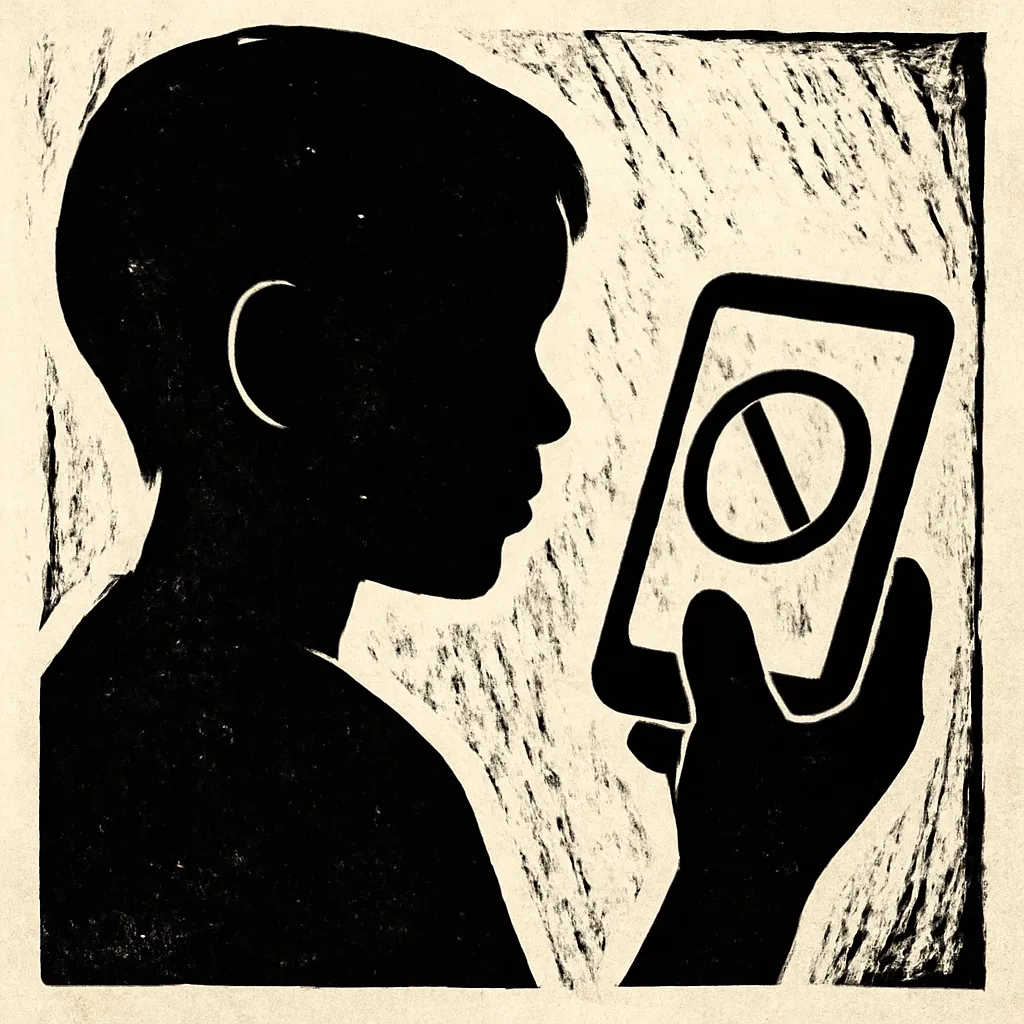
Across late June and early July 2026, South African talk radio returned repeatedly to a single question: should the country follow Australia's lead and legally bar children from social media platforms? The trigger was Australia's world-first ban on under-16s using TikTok, Instagram, Facebook, Snapchat, Reddit and YouTube, which came into force in December 2025 and was reinforced in late June with fines of up to 99 million Australian dollars for non-compliant platforms.
Power FM anchored much of the coverage, hosting cyber-safety advocates and legal consultants who framed the debate around age verification, platform accountability and children's rights. CapeTalk pushed the conversation into the home — screen time for toddlers, a proposed crime of "digital negligence" for parents, and the Meta court battles over child sexual abuse material. SAfm and 702 added the regulatory and commercial context: UNICEF data on South African children's exposure, and how age bans threaten the user base of American tech giants.
What emerged was less a debate about whether harm exists than about what a South African model should look like: outright ban, guidelines, parental criminal liability, or platform-side enforcement.
Australia sets the benchmark
The spark for the on-air debate was unmistakably Australia. Power FM's news bulletins hammered the point across successive days: children under 16 have been banned from major platforms since December 2025, but "many are still accessing them," prompting investigations into Facebook, Instagram, Snapchat, TikTok and YouTube for alleged non-compliance.1 Prime Minister Anthony Albanese was quoted directly — "big tech are not doing enough to comply with the law" — as Canberra doubled maximum penalties to A$99 million and handed the eSafety Commissioner stronger investigative powers.2 By early July, Power FM was recapping the Australian model in detail: a December 2026 enforcement date, the full platform list, and fines running into the tens of millions.3
The South African framing: is there a case for a ban here?
Power FM opened the topic on 18 June by asking directly whether children under 18 should be barred from social media platforms, noting Australia had "already taken the action."4 The station's guest — later identified as social media legal consultant and cyber-safety advocate Lerato Andwaipe — argued the local conversation had to balance restriction with children's rights, focusing on "age verification, prioritising child safety, enhancing parental support, content moderation tools."5 Asked whether South Africa had enough research to justify intervention, the guest pointed to work done in Australia and the UK and said local evidence on "illegal content, harmful content in terms of the fundamental design of the platforms" was sufficient to act.6
By 2 July, Power FM was hosting a dedicated segment on "what a social media digital ban for children could look like within the country," with Andwaipe describing her initial reaction to Australia's law as "excitement" given the damage she sees in her work with children.78
Mental health, addiction and platform design
Much of the on-air argument for regulation rested on harm. A Power FM guest laid out the mental-health case bluntly: "these platforms can be addictive… we know it has a negative impact… people can be exploited on it," citing overseas litigation against Meta.9 702's news desk carried a parallel American story — a 15-year-old suing YouTube and other networks over mental-health harm, with Google defending its "age-appropriate products and parental controls."10
SAfm sharpened the local stakes by citing UNICEF: more than 95% of South African children have regular internet access, only 41% have received any online safety information, and 52% have added strangers to their networks. "They're innocent. They don't know. They want to reach out," the presenter noted.11
CapeTalk pushes the conversation into the home
CapeTalk took the debate away from platform bans and into parenting and screen time. The station reported that Basic Education Minister Siviwe Gwarube's department is developing national screen-time guidelines for children aged two to six, and interviewed Digital Law Company founder Emma Sadler.12 Sadler flagged a proposed new offence of "digital negligence" — aimed at "those parents who are putting the four-year-old in front of YouTube for 16 hours a day" — as a genuinely radical step, while questioning whether softer guidelines alone would achieve much without a public education campaign.13 A CapeTalk presenter went further, describing the social media space as "such a trap for young children" and endorsing the view that under-twos should have no phone access at all.14
CapeTalk also reported new research examining 33,000 public posts across TikTok, Facebook and Instagram over two years to map the impact of South Africa's digital culture on boys and men — evidence, the station suggested, of how deep the local harms run.15
Platform accountability and the Meta problem
A recurring theme was that platforms will not act unless forced. CapeTalk highlighted a South African court case in which WhatsApp channels and Instagram were used for the online sexual abuse of children, available to "literally tens of thousands of people here and around the world" — and campaigners had to go to court "more than once to eventually get Meta to do what was right."16 Power FM's guest noted South Africa already has laws covering illegal content, particularly child sexual abuse material, but framed the question as whether the design of the platforms themselves should be regulated.17
The flip side surfaced on CapeTalk too: a caution that content moderation "sometimes goes too far," with legitimate posts about periods, breastfeeding and reproductive health being removed or shadow-banned.18
The commercial and geopolitical backdrop
702 supplied the business lens. Discussing the UK's move toward barring under-16s, a market commentator noted this "chows into the bottom line… into the user base" of American tech companies that "would like open access to everyone," hinting at the lobbying resistance any South African ban would face.19 Power FM widened the frame further, asking whether South Africa has "a broad framework around how to shape the consciousness of society using mass media" — invoking China's TikTok censorship as a contrasting model of state control.20
What's unresolved
Across the four stations there was near-consensus that the status quo is untenable, but no agreement on the instrument. Power FM's guests leaned toward an Australian-style age gate paired with platform accountability. CapeTalk foregrounded parental responsibility, screen-time guidelines and a possible criminal offence of digital negligence. SAfm emphasised the education and awareness gap. 702 flagged the commercial resistance and civil-liberties tension. What no presenter could yet answer is the practical one: how South Africa — with 95% child internet penetration and thin enforcement capacity — would actually make any ban stick when Australia, with far greater resources, is already struggling with non-compliance six months in.21 That gap between ambition and enforceability is the story worth watching.
- 702
- Cape Talk
- Power FM
- SAfm
Citations
- 1.
“of 16 have been banned from major social media platforms since December last year, but many are still accessing them. Authorities have opened investigations into Facebook, Instagram, Snapchat, TikTok and YouTube over alleged non-compliance. Prime Minister Anthony Albanese says tech companies are not doing enough to keep children off social media. Big tech are not doing enough to comply with the law, and there are still too many children on social media. So we're calling time on the social media companies. Today, we're calling time on the social media companies.”
- 2.
“In some instances, it has been a misreading of those authorities with respect. And finally, Australia will double the maximum penalty for breaches of its social media age restriction law to 99 million Australian dollars. The government is also giving the e-safety commissioner stronger powers to investigate whether platforms are enforcing the ban. I'll have more details on this and other power news at 1PM.”
- 3.
“A really, really important conversation about what could a social media digital ban for children look like in the country. Australia is one of those countries which has introduced one of the world's toughest social media blowers. From December 10th, 2026, children under 16 are prohibited from using major platforms. TikTok, Instagram, Facebook, Snapchat, Reddit, YouTube, and any company that fails to comply can face fines of up to 39.”
- 4.
“Developments around the world, there's a big debate basically about children's access to social media and policymakers, educators, governments and child protection advocates have been asking the difficult question that should children be under 18 be barred from social media platforms. Australia has already taken the action and they've banned children under 16 from”
- 5.
“and just several rights that people have children also have. So I think we're looking more at restricting certain things and probably holding social media platforms accountable for certain things on their platforms. For example, AIDS verification, prioritizing child safety, enhancing parental support, content moderation tools, which is quite cool.”
- 6.
“such as Australia and UK in particular. A lot of work had been done in terms of research and the body of research work. And is there enough in South Africa? Do we know enough about the harm? I think we do it. Particularly when it comes to illegal content, harmful content in terms of the fundamental design of the platforms. We search and be doing.”
- 7.
“Khaasak, Social Media, Digital Band for children looked like within the country, right? The social media bands that have happened in Australia, the UK is also there and you also have other countries as well and there is a debate around children's access to social media and it's gaining momentum around the world with countries introducing stricter rules to protect young people from harmful online content, cyber bullying and of course excessive screaming.”
- 8.
“Teenagers, whose brains are yet to be fully formed. They need more sleep, but they don't have enough sleep. But when we look at countries like Australia and how it became the first country to have such a strict ban on social media for children, what was your initial reaction to this very landmark decision? I think my initial reaction was excitement. I think working in the space of children and seeing just how much damage”
- 9.
“So it does have an impact on our mental health and we're seeing really significant changes with regards to social media, especially overseas, with the litigation against Facebook or Meta and other social media giants in that we know that these platforms can be addictive. We know it has a negative impact. We know that people can misuse it. We know that people can be exploited on it. So we must just talk about that.”
- 10.
“and 15-year-old American who accused the Google-owned platform and other social media networks of harming his mental health three months after an unprecedented verdict in a similar case. Google has confirmed the deal saying the company had built YouTube responsibility for more than a decade and that its focus remains on building age-appropriate products and parental controls. And those are the headlines, this E.W.N. and more at 10 or as it happens.”
- 11.
“Nussef, UNICEF, highlights the scale of the challenge. More than 95% of South African children have regular internet access. That's unknown. That's huge. Only 41% have received information about online safety. And 52% have added people. They have never met in real life to their online networks. They're innocent. They don't know. They want to reach out. So at the same time in South Africa,”
- 12.
“or Lesov. Email [email protected]. You're listening to the best of talk. The basic education minister, Seviwe Guahulbe, said government is in the process of developing national screen time guidelines for children between the ages of two and six. Emma Sadler, founder of the digital law company and social media person, Extraordinary joins us now from Johannesburg.”
- 13.
“and New Law, that is going to come into force which introduces a crime of digital negligence, which is really for those parents who are putting the four-year-old in front of YouTube for 16 hours a day. That's actually going to come with criminal consequences. So unless we go that radical a step, is there any point in the guidelines? Look, I do think that guidelines, if they come with a sort of a campaign to roll out and to educate, that guidelines that exist on the internet.”
- 14.
“Social Media Space, which is such a trap for young children. I was listening to a conversation that John Maytham had with somebody and this person was saying, "Between the ages of zero to two years old, no cell phones at all." And I think that is my pit, Hates, with a child who is six months old or eight months old or a year old sits in a shopping trolley with the cell phone. I want to scream. And then between the ages of about two all the way to six, seven years old.”
- 15.
“Breaking Research, Examining the impact of South Africa's digital culture on boys and men. Some 33,000 public social media posted across TikTok, Facebook and Instagram over a two-year period uncovered very disturbing trends. And we'll unpack those at about 10, 30 this morning. But watch out to a conversation about the prosecution project by the Dala Uma Institute and that conversation at about 1100. Some of the things that we're doing here,”
- 16.
“and WhatsApp. Those channels can be used for all sorts of useful purposes but in the matter before the courts and WhatsApp channels and Instagram were used to abuse young South Africans online sexual abuse of South African children available to literally tens of thousands of people here and around the world. They had to go to court more than once to eventually get Meta to do what was right. It was a battle that was worth fighting sadly.”
- 17.
“and Alina Kannan, and all of that. What does this collaboration look like and how does everyone play their part in this? I think when it comes to social media platforms, we do have some laws that protect children, especially when it comes to illegal content. So illegal content, we're talking about child sexual abuse materials. In a South African context, that's child pornography.”
- 18.
“Social media companies get a lot of criticism for what appears on their platforms, and most of us are used to content moderation. That's when posts are being removed or restricted if they're illegal, offensive or not suitable for children. But there's a growing concern that these systems sometimes go too far. Some women's health organizations say perfectly legitimate posts about periods, breastfeeding or reproductive health are being taken down or quietly headed.”
- 19.
“and I would like to the fact that there's almost overregulation in Europe. But when you think about what happened, for example, in Britain this week, when they said that under 16 year olds are not allowed to be on social or in all likelihood, that's in about two years time will not be allowed to be on social media again. That chows into the bottom line, that chows into the user base of that a lot of these tech companies that are American haven't for them. They'd like open access to to everyone.”
- 20.
“and as you're saying, influencing the psyche of our kids. And I'm just wondering, does South Africa actually have a broad framework around how to shape the consciousness of society using mass media, popular culture, etc. because as you said, if you look at the kind of censorship that is done in China as far as TikTok is concerned, is done so as to make sure that it's done.”
- 21.
“powers to investigate whether platforms are enforcing the ban. Children under the age of 16 have been banned from major social media platforms since December last year, but many are still accessing them. Authorities have opened investigations into Facebook, Instagram, Snapchat, TikTok and YouTube over alleged noncompliance. Prime Minister Anthony Albanese says tech companies are not doing enough to keep children off social media. Big tech are not doing enough to comply with the law and there are still too many”